
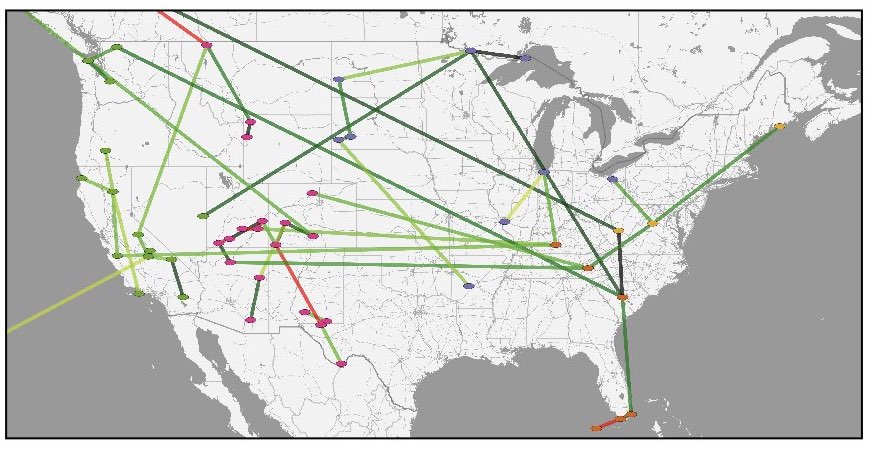
A new study published in PNAS Nexus by a MCS team affiliated with the UCM National Parks Institute applies machine learning, network science and big data methodologies to explore how the paradoxical dual mandate facing the NPS -- which is to preserve invaluable environmental and cultural resources for all future generations, while also ensuring their public accessibility for recreational enjoyment - has become more nuanced and duanting (ie complex) in the era of new media.
Despite NPs fostering public appreciation necessary to protect natural capital, the emergence of ecotourism marketing coupled with a growing global tourist population have rendered visitation growth unsustainable and is likely to exacerbate the paradox of sustainable tourism management.
While greater integration of national parks into the public sphere may foster deeper appreciation for parks and protected areas as interconnected human-environmental systems, heightened media co-visibility could also drive increased co-visitation. This, in turn, may intensify pressures on already strained administrative capacities and fragile ecosystems—particularly in the context of declining budgetary support.
Read the abstacts below and watch the YouTube video summary:
A. M. Petersen, F. Arroyave, S. Shackelton, J. Jenkins, Increasing digital media visibility and tourism messaging promotes US National Park system integration. PNAS Nexus (2026).
Abstract: The National Park Service (NPS) faces a paradoxical dual mandate—to preserve invaluable environmental and cultural resources for future generations and to ensure their public accessibility for recreational enjoyment. Yet with >124 million visitors in 2019, the US national parks (NPs) are at risk of being “loved to death” a challenge faced by protected areas the world over. This growing demand for ecosystem services calls for new strategies to enhance public appreciation and commitment to protecting natural capital. Against this backdrop, we analyzed the structure and dynamics of the NP system through a public-facing lens constructed from >426,000 digital media articles mentioning at least one park by its official name. Our analysis reveals that from 2010 to 2019, NP media visibility grew by over 3,900%, outpacing 29% growth in visitation, and a 15% decline in federal budget support for NPs. We find that this disproportionate media growth is driven by tourism-oriented articles referencing multiple NPs, which has become the principal driver of NP system integration in the public sphere. Consequently, ecotourism marketing has displaced public attention from critical issues associated with environmental, wildfire and wildlife management. With many NPs operating at or near capacity, tourism-driven integration of the NP system may intensify fundamental tensions within the NPS dual mandate, as rising demand for ecosystem services collides with limited federal resources and growing environmental risks.


